
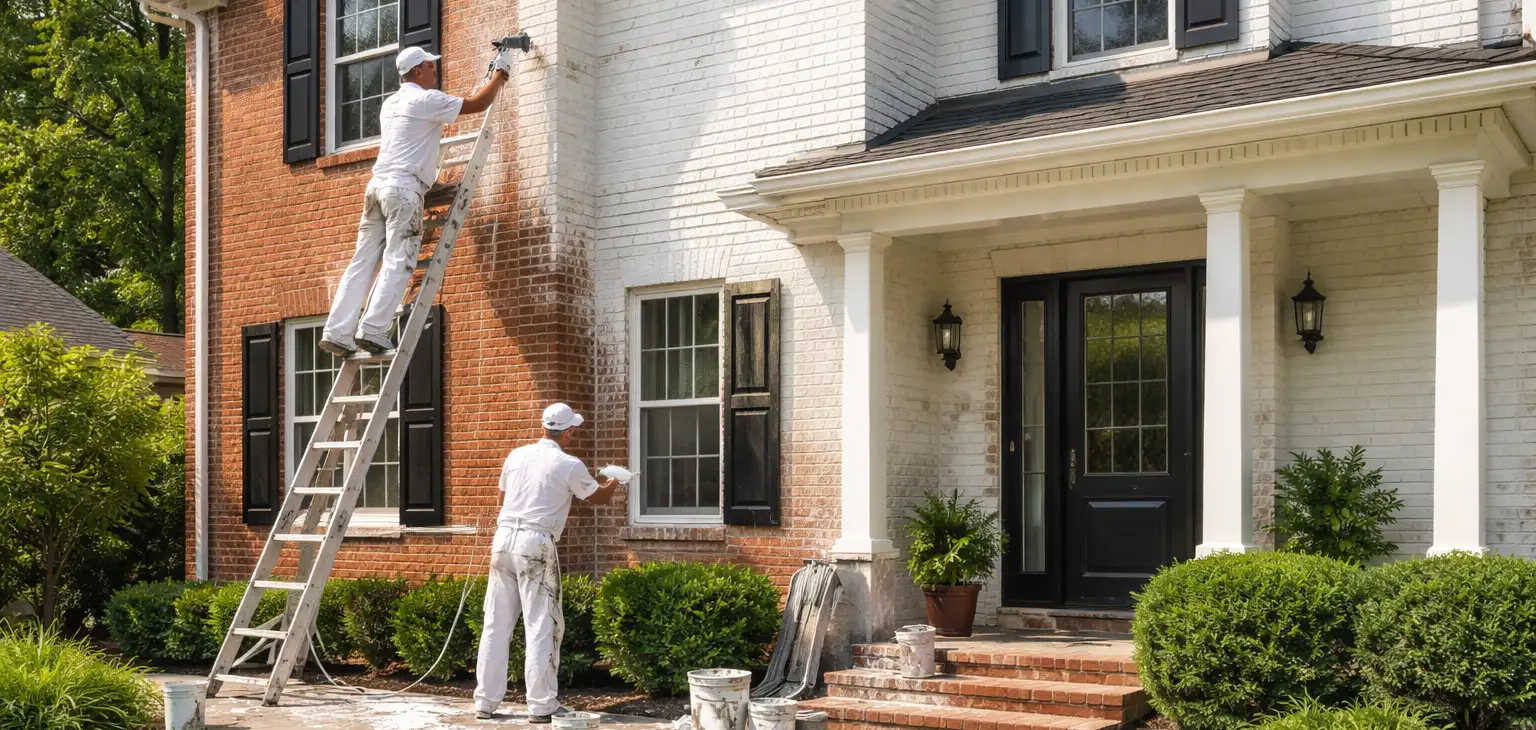

Can a Brick House Be Painted?
Brick houses have a reputation. Solid. Honest. Dependable. They stand there for decades, silently judging passing trends, questionable siding choices, and that neighbor who keeps repainting their house every three years. But sooner or later, a perfectly reasonable question appears in the mind of a homeowner: can a brick house be painted?
Short answer — yes.
Long answer — yes, but only if you do it right, understand what you’re dealing with, and accept that brick has opinions.
Let’s break it all down in a way that’s actually useful, slightly entertaining, and realistic for Canadian homeowners.
Why People Even Think About Painting Brick
Brick used to mean “maintenance-free forever.” Then time happened.
Weather, moisture, sun, soot, and good old Canadian freeze–thaw cycles can all take their toll. Bricks fade unevenly, mortar stains appear, and suddenly your once-proud façade looks tired instead of timeless.
Other common reasons homeowners consider painting brick include:
- Updating the exterior to match a modern look
- Covering mismatched or repaired brick sections
- Increasing curb appeal before selling
- Making an older home feel less… 1974
Paint can completely transform a brick house. It’s dramatic. It’s bold. It’s the exterior equivalent of a fresh haircut and a tailored jacket.
Yes, Brick Can Be Painted — But It’s Not Drywall
Here’s the most important thing to understand: brick is porous.
It breathes. It absorbs moisture. It releases moisture. It has a whole moisture-management lifestyle going on behind the scenes.
Painting brick doesn’t mean sealing it like a plastic container. It means using the right materials and techniques so moisture can still escape without destroying the paint or the brick itself.
This is where many DIY projects go off the rails.
What Happens If Brick Is Painted Incorrectly
Painting brick the wrong way doesn’t usually fail right away. It waits. Patiently. Then one day:
- Paint starts bubbling or peeling
- White powder (efflorescence) appears
- Moisture gets trapped inside the wall
- Brick begins to crack or spall
- Repairs suddenly cost more than the original paint job
Brick remembers everything. And it never forgets a bad paint job.
The Right Way to Paint a Brick House
Painting brick is not about grabbing leftover interior paint and hoping for the best. It’s a process, and every step matters.
Step 1 – Inspection Comes First
Before any paint touches the wall, the brick and mortar need to be evaluated.
Cracked bricks, crumbling mortar, moisture intrusion, or previous coatings all affect whether painting is appropriate. Sometimes brick needs repair before it needs paint.
This is one of the biggest reasons professional assessment matters.
Step 2 – Proper Cleaning Is Non-Negotiable
Brick must be thoroughly cleaned to remove:
- Dirt and dust
- Mold or mildew
- Efflorescence
- Old paint residue
This usually involves pressure washing at the correct PSI. Too weak, and nothing comes off. Too strong, and you damage the brick or mortar.
Brick is tough, not indestructible.
Step 3 – Repairs Before Paint
Any damaged mortar should be repointed. Cracked bricks should be repaired or replaced. Painting over damage doesn’t hide it — it highlights it later.
Think of paint as a final layer, not a miracle cure.
Step 4 – Breathable Masonry Paint Only
This is the big one.
Brick requires breathable masonry paint or mineral-based coatings that allow moisture vapor to escape. Regular exterior paint can trap moisture, leading to long-term damage.
This is where professional-grade materials make a massive difference.
Step 5 – Application Technique Matters
Brick surfaces are uneven. Mortar joints, texture, and absorption rates vary across the wall.
Professionals use a combination of spraying and back-rolling to ensure even coverage, proper penetration, and consistent finish. One thin coat is rarely enough. Two properly applied coats usually are.
Painted Brick vs. Limewashing
Some homeowners consider limewashing instead of painting. Limewash gives a softer, more natural look and allows maximum breathability.
However, limewash:
- Offers less color consistency
- Requires more maintenance
- Doesn’t suit every architectural style
Paint provides a more uniform, bold finish and longer-lasting protection when done correctly. The right choice depends on the home, the look you want, and the condition of the brick.
Is Painted Brick High Maintenance?
This is a common myth.
Painted brick does not require constant upkeep, but it isn’t zero-maintenance either. Expect repainting roughly every 10–15 years when high-quality products and proper preparation are used.
That’s a fair trade for a completely refreshed exterior that can add serious visual impact and value.
Does Painting Brick Reduce Home Value?
Only when it’s done poorly.
A professionally painted brick house with modern colors and clean lines often increases curb appeal and market interest. Buyers respond to homes that look cared for, intentional, and updated.
On the other hand, flaking paint, trapped moisture, or uneven coverage raises red flags immediately.
Quality always shows — especially on brick.
Why DIY Brick Painting Is Risky
Painting brick looks deceptively simple. Rollers exist. Paint cans exist. Confidence exists.
Experience, however, is usually missing.
Mistakes in brick painting aren’t cosmetic — they’re structural. Once moisture problems begin, they’re difficult and expensive to reverse.
That’s why many homeowners choose professional painting services in Calgary rather than experimenting on one of the most important surfaces of their home.
Why Professional Painters Make All the Difference
Professionals understand:
- Brick chemistry and moisture behavior
- Which paints work in Calgary’s climate
- How temperature affects curing
- How to prepare masonry properly
- How to protect landscaping and surrounding surfaces
A skilled residential painter Calgary homeowners trust isn’t just applying color — they’re protecting the structure beneath it.
Final Thoughts – So, Can a Brick House Be Painted?
Absolutely.
When done correctly, painting a brick house can modernize its appearance, protect the exterior, and dramatically improve curb appeal. When done incorrectly, it becomes a long-term problem disguised as a short-term upgrade.
Brick is strong. Paint is powerful. Together, they work beautifully — but only when handled with respect and expertise.
If your brick home is ready for a transformation, the smartest move isn’t grabbing a ladder and hoping for the best. It’s choosing professionals who understand brick, climate, materials, and craftsmanship — and who make the process smooth from the first inspection to the final coat.