
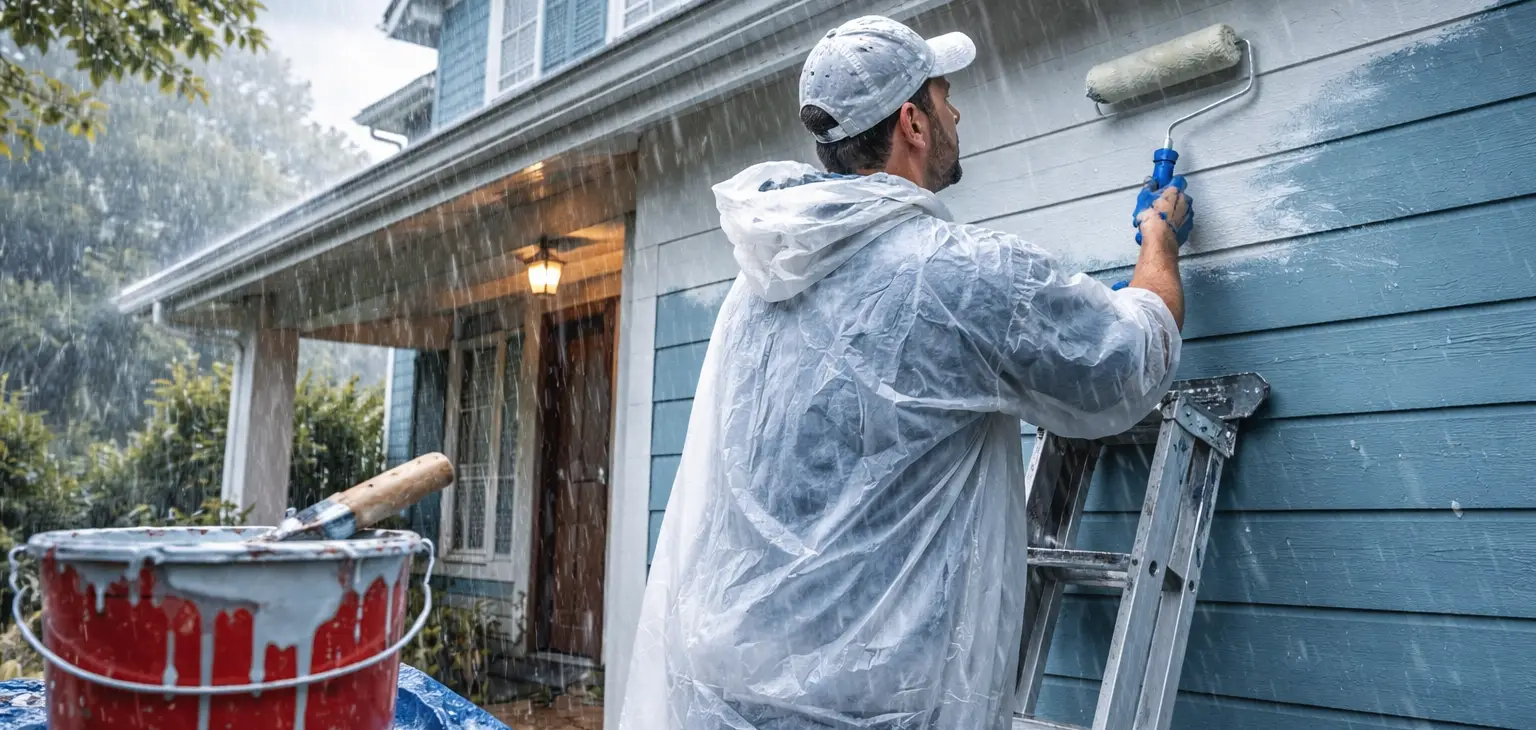

Can You Paint a House in the Rain?
If you live in Canada, rain is not a rare guest — it is practically a family member who drops by unannounced. In cities like Calgary, the weather can change its mind faster than you can open a paint can. One moment it’s sunny and calm, the next moment clouds roll in like they have a personal grudge against your weekend plans. This naturally leads to a very common homeowner question: can you paint a house in the rain?
Short answer — technically yes, practically no, and professionally… please don’t.
Long answer — let’s dive in, with a bit of humor and a lot of useful facts.
What Actually Happens When You Paint in the Rain
Paint and water have a complicated relationship. Paint needs time to bond to a surface, dry evenly, and cure properly. Rain interrupts all of that in spectacular ways.
When rain hits fresh paint, several things can go wrong:
- Water dilutes the paint before it dries, weakening adhesion
- Streaks, bubbles, and blotchy patches appear on the surface
- The paint may peel or flake within weeks instead of lasting years
- Moisture can get trapped underneath, leading to mold and rot
In other words, rain doesn’t just ruin the look — it shortens the lifespan of the entire paint job. What should last 7 – 10 years might start failing before the next hockey season.
“But the Can Says It’s Weather-Resistant”
Paint cans love optimism. Many exterior paints claim to be “weather-resistant” or “rain-ready.” This does not mean you can paint during a rainstorm while wearing flip-flops and hope for the best.
What manufacturers usually mean is this:
- The paint can tolerate light moisture after a certain drying time
- Some formulas resist brief drizzle, not steady rainfall
- Ideal conditions are still dry surfaces and stable weather
Most exterior paints need at least 4 – 8 hours of dry weather after application. Some premium products require even more. Rain during that window can undo all your hard work faster than you can say “touch-up.”
Surface Moisture Is the Silent Deal-Breaker
Even if it stops raining, the house itself may still be wet. Wood siding, stucco, brick, and even fiber cement absorb moisture. Painting over a damp surface is like putting wallpaper on a steamy bathroom wall — it looks okay for a moment, then gravity and physics take over.
Professionals always check:
- Moisture levels in siding and trim
- Shaded areas that dry slower
- North-facing walls that hold dampness longer
This is one of the biggest reasons DIY paint jobs fail. The wall looks dry, but it isn’t. A professional Calgary house painter knows how to measure and assess this properly.
Temperature and Humidity Matter Just as Much
Rain rarely comes alone. It usually brings cooler temperatures and higher humidity, both of which affect paint performance.
Here’s what paint prefers:
- Temperatures typically between 10°C – 30°C
- Low to moderate humidity
- Stable conditions for at least one full day
High humidity slows drying, allowing dust, pollen, and moisture to settle into the paint. The result is a rough finish that feels like sandpaper — not exactly the curb appeal you were aiming for.
Interior Painting During Rain — Is That Different?
Interior painting during rain is generally safer, but still not completely risk-free. High humidity can affect drying times indoors too, especially in older homes or poorly ventilated spaces.
Problems you may notice:
- Paint staying tacky longer than expected
- Uneven sheen or dull patches
- Lingering paint smell
Professionals adjust ventilation, dehumidification, and product choice to avoid these issues. Most homeowners do not.
Why Professionals Don’t Gamble With Weather
A reputable painting contractor Calgary homeowners trust will never gamble with rain. Why? Because professionals guarantee results, not excuses.
Professional painters:
- Track detailed local weather forecasts
- Schedule work around drying and curing windows
- Use products suited to specific conditions
- Protect surfaces with proper coverings
- Know when to stop and when to reschedule
This level of planning is why professional paint jobs last longer, look cleaner, and cost less in the long run — even if the upfront price feels higher.
The Hidden Cost of “I’ll Just Try Anyway”
Painting in the rain often leads to a second paint job much sooner than expected. That means:
- Paying twice for materials
- Paying twice for labor or your own time
- Dealing with peeling, blistering, or discoloration
- Potential repairs to siding or trim
Suddenly, that “budget-friendly” DIY project becomes an expensive lesson in meteorology.
Calgary Weather Makes This Even Trickier
Calgary’s climate deserves special mention. With sudden showers, temperature swings, and strong sun between storms, exterior painting requires careful timing.
One sunny afternoon followed by a cold, wet night can:
- Shock uncured paint
- Cause micro-cracking
- Reduce adhesion
Local experience matters. Companies like Rennewservices understand how Calgary weather behaves, not just what the forecast says. That local knowledge often makes the difference between a paint job that lasts and one that fails quietly — until it doesn’t.
So, Can You Paint a House in the Rain?
Let’s summarize honestly:
- Can you physically apply paint while it’s raining? Yes
- Will it look good and last? Very unlikely
- Is it worth the risk? Absolutely not
Painting is not just about color — it’s about protection. Exterior paint shields your home from moisture, UV rays, and temperature extremes. Applying it under the wrong conditions defeats its entire purpose.
The Smart Choice — Leave It to the Pros
If you want a durable, clean, and professional finish, timing and technique matter as much as the paint itself. Hiring experienced professionals means:
- No guessing about weather conditions
- No wasted materials
- No premature peeling or repairs
- A finish that adds real value to your home
Rain happens. Paint failures don’t have to.
When the clouds roll in and your house still needs a fresh look, the smartest move is to let trained professionals handle it — with the right tools, the right timing, and the right expertise.