
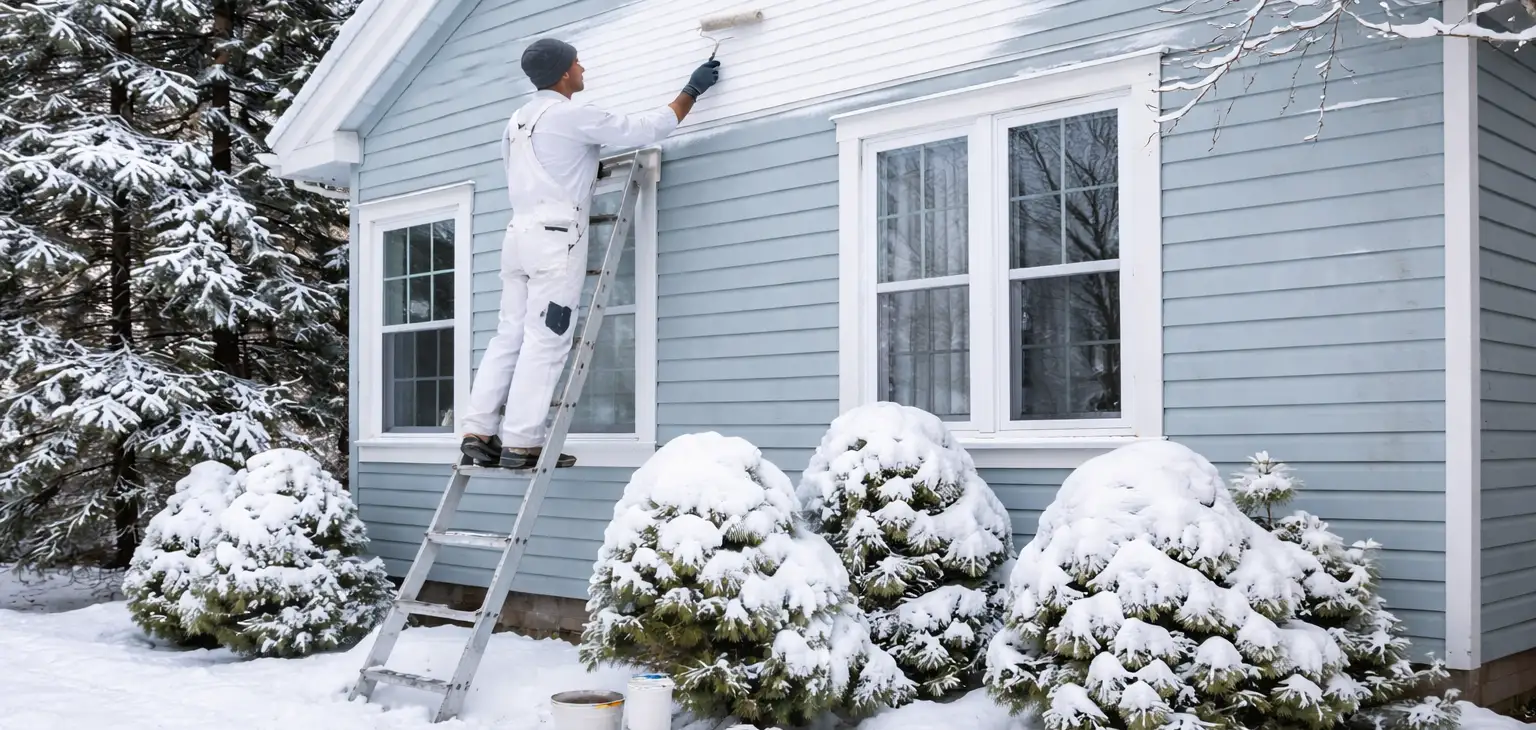

Can You Paint Your House in the Winter?
Winter in Canada is not exactly famous for being gentle. Snowstorms, icy winds, temperatures that make your phone battery surrender in five minutes — and yet, every year, homeowners look at their walls and think: “This room really needs a new color… but it’s January.”
So let’s answer the big question honestly, thoroughly, and with a bit of humor: can you paint your house in the winter?
Short answer: yes… but only if you understand the rules of the game.
Why Winter Painting Even Comes Up
In an ideal world, everyone paints in late spring or summer. Windows are open, paint dries fast, and nobody is wearing three layers of clothing indoors. But real life is different.
Sometimes:
- You buy a house in December
- You’re renovating during the off-season
- You finally have time while everything outside is frozen
- Or you’re selling and need fresh walls now, not in May
Winter painting isn’t about rebellion against the seasons — it’s about necessity and smart planning.
Indoor Painting in Winter – Surprisingly Practical
Let’s start with the good news. Interior painting in winter is often completely fine — and sometimes even better than in summer.
Cold weather outside doesn’t matter much if:
- The home is heated consistently
- Humidity is controlled
- Proper paint products are used
Modern interior paints are designed to cure well at room temperature. As long as your home stays above the manufacturer’s minimum temperature (usually around 10–13°C / 50–55°F), the paint will dry and cure properly.
Bonus: Fewer Distractions
No open windows means less dust, pollen, and insects deciding to permanently live in your fresh paint. Winter painting is quieter, cleaner, and more controlled.
Exterior Painting in Winter – Here’s Where It Gets Tricky
Painting the outside of a house in a Canadian winter is a completely different story.
Low temperatures can:
- Prevent paint from bonding properly
- Cause cracking or peeling later
- Slow curing to a crawl
- Trap moisture inside the surface
Most exterior paints are not designed for freezing or near-freezing conditions. Even if daytime temperatures look acceptable, overnight freezes can ruin everything you applied during the day.
That said, there are exceptions.
Cold-Weather Paints – Yes, They Exist
Some modern exterior paints are formulated for colder temperatures and can be applied at around 2–5°C (35–40°F). But here’s the catch:
- Surfaces must be completely dry
- Temperatures must stay above minimum limits for many hours
- Sun exposure and wind conditions matter
- Timing becomes critical
This is not a “grab a roller and hope for the best” situation.
Professionals who work as painters in Calgary understand how unpredictable winter weather can be. They know when conditions are safe — and when it’s better to wait.
The Hidden Enemy – Humidity and Condensation
Winter air is dry outside but often too humid inside homes due to heating, cooking, and poor ventilation.
Condensation can:
- Form on cold walls
- Prevent proper adhesion
- Cause bubbling or uneven finishes
This is why winter painting requires more preparation than summer projects. Temperature control, airflow, and surface inspection matter more than ever.
Why DIY Winter Painting Often Goes Wrong
Painting looks simple. Until it isn’t.
Common winter DIY mistakes include:
- Painting over cold or damp surfaces
- Turning off heat at night to save money
- Using the wrong paint type
- Ignoring cure times
- Rushing the job because “it’s cold anyway”
The result? Peeling paint, uneven sheen, strange textures, and the joy of repainting everything later.
That’s usually when people realize why professional home painting Calgary services exist in the first place.
Professional Winter Painting – What’s Different?
Professionals don’t fight winter — they work with it.
A qualified painting company will:
- Measure surface and air temperatures
- Control indoor climate during curing
- Use appropriate cold-weather products
- Adjust timelines realistically
- Know when to say “not yet”
This experience prevents expensive mistakes and ensures the finish actually lasts.
At Rennewservices, winter painting projects are approached strategically, not emotionally. Because paint doesn’t care how motivated you are — it cares about physics.
Is Winter Painting Cheaper?
Sometimes, yes.
Winter is often the off-season for painting services, which can mean:
- More flexible scheduling
- Faster project start times
- Potential cost advantages
However, cost should never come at the expense of quality. A cheaper winter paint job that fails in six months is not a deal — it’s a delay.
When Winter Painting Makes Sense
Winter painting is a good idea if:
- The project is indoors
- Temperature and humidity are controlled
- The timeline matters
- Professional guidance is involved
It’s usually not ideal for full exterior repaints unless conditions are carefully evaluated.
Final Thoughts – Should You Paint in the Winter?
Yes, you can paint your house in the winter — but only if you do it the right way.
Interior painting is often perfectly safe and efficient. Exterior painting requires expert judgment, the right materials, and experience with Canadian weather realities.
If there’s one thing winter teaches homeowners, it’s this: shortcuts rarely survive the cold.
So if your walls are begging for a refresh while snow piles up outside, winter doesn’t have to stop you. Just make sure the job is done by people who understand how paint behaves when Canada decides to be Canada.
Because winter is tough enough — your paint job shouldn’t have to be.