

How Many Coats of Paint Does Stucco Need?
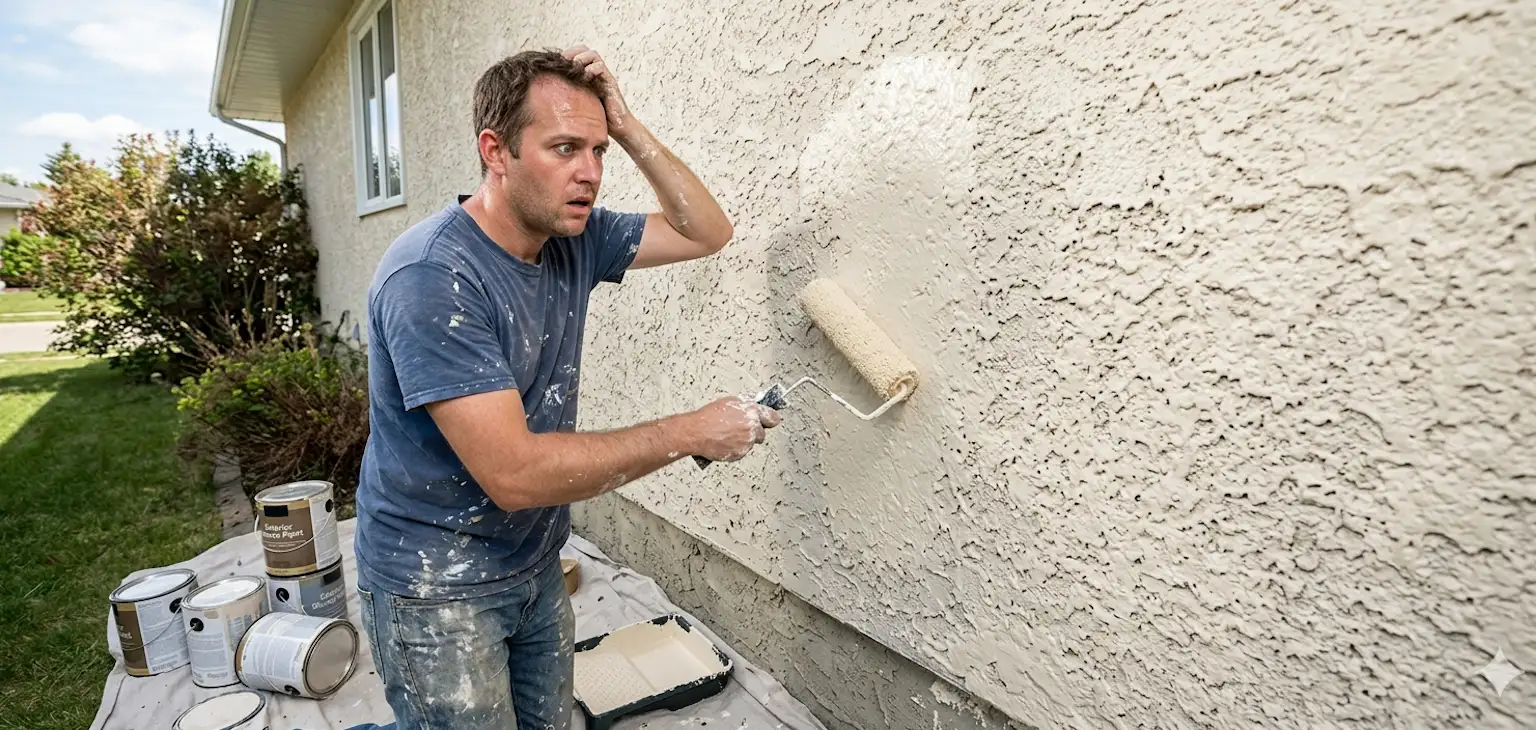
Stucco is one of those surfaces that looks simple at first glance but quickly proves it has a personality of its own. Rough, porous, and slightly unpredictable, it behaves more like a sponge than a smooth wall. And when it comes to painting it, one of the most common questions homeowners ask is: How many coats of paint does stucco actually need?
The short answer – more than you think. The long answer – it depends on several factors, including the condition of the surface, the type of paint, and how long you want the result to last without turning into a peeling, patchy mess.
Let’s break it down step by step, with a bit of humor and a lot of practical insight.
Why Stucco Is Not Your Average Surface
Painting drywall is like spreading butter on toast – smooth, predictable, and forgiving. Stucco, on the other hand, is more like trying to butter a sponge. It absorbs, it resists, and it demands patience.
The texture of stucco creates thousands of tiny peaks and valleys. These irregularities trap paint, meaning one coat rarely provides even coverage. If you’ve ever seen a freshly painted stucco wall that still looks blotchy, you’ve witnessed what happens when someone underestimates this material.
This is exactly why professional painters approach stucco differently – they treat it as a system, not just a surface.
The Standard Answer – Two Coats (Minimum)
In most cases, stucco requires at least two coats of paint.
Here’s why:
- The first coat acts as a base layer – it soaks into the porous surface and creates initial coverage
- The second coat builds color consistency and durability
- Together, they ensure even coverage across all the textured areas
Skipping the second coat might save time today, but it often leads to uneven color, premature fading, and reduced protection against the elements.
If the goal is a clean, professional look that lasts for years, two coats are not optional – they are essential.
When Two Coats Are Not Enough
Sometimes, stucco decides that two coats simply aren’t enough. Yes, it can be that demanding.
You may need a third coat in situations like:
- Color changes – especially going from dark to light shades
- Highly porous or older stucco – which absorbs more paint than usual
- Poor previous paint jobs – uneven layers, stains, or patchy repairs
- Extreme weather exposure – surfaces that have been heavily worn
In these cases, the third coat acts as a finishing touch, ensuring uniform color and long-term durability.
Professionals often evaluate the surface after each coat rather than blindly applying a set number. That’s one of the key differences between DIY work and expert-level results.
The Role of Primer – The “Invisible Coat”
Here’s where things get interesting. Technically, primer is not counted as a “coat of paint,” but in practice, it behaves like one.
Primer plays a crucial role in stucco painting:
- It seals the surface and reduces excessive absorption
- It improves adhesion of the paint
- It enhances color consistency
Without primer, the first coat of paint gets partially “eaten” by the stucco, which means you may end up needing additional coats just to compensate.
Think of primer as setting the stage – without it, the performance falls apart.
Paint Quality – Not All Coats Are Created Equal
Two coats of high-quality paint can outperform three coats of cheap paint. This is not marketing talk – it’s simple chemistry.
Premium exterior paints designed for stucco:
- Have better elasticity to handle expansion and contraction
- Offer superior coverage, reducing the need for extra coats
- Provide stronger resistance to moisture and UV rays
Lower-quality paints tend to be thinner and less durable, meaning more coats are required to achieve the same result – and even then, the longevity may still be compromised.
This is where cutting corners often backfires. Saving a bit on paint can lead to repainting much sooner than expected.
Application Technique Matters More Than You Think
Even if you use the right number of coats, poor application can ruin everything.
Stucco requires specific techniques:
- Back-rolling after spraying to push paint into crevices
- Using thicker nap rollers to reach textured areas
- Applying paint evenly to avoid streaks and buildup
A rushed or uneven application often leads to visible inconsistencies, especially under sunlight. And once those imperfections are locked in, fixing them becomes much more complicated.
This is one of the main reasons why professional painters consistently deliver better results – they understand how to work with the texture, not against it.
Weather Conditions – The Silent Influencer
Weather plays a surprisingly large role in how many coats of paint stucco will need.
Factors like temperature, humidity, and sunlight affect:
- Drying time between coats
- Paint absorption rate
- Final appearance and durability
For example, painting in very hot conditions can cause paint to dry too quickly, preventing proper adhesion. On the flip side, high humidity can slow drying and lead to uneven finishes.
Experienced painters carefully choose the right conditions to ensure each coat performs as intended.
How Long Should Each Coat Dry?
Patience is not just a virtue here – it’s a requirement.
Typically:
- Each coat should dry for 24 hours before applying the next
- Some paints may allow shorter intervals, but rushing is risky
Applying a second coat too soon can trap moisture, leading to bubbling or peeling later on. And that’s the kind of mistake that only becomes visible months down the line.
DIY vs Professional Work – Where the Real Difference Shows
Painting stucco might look like a weekend project, but in reality, it’s a multi-step process that demands time, skill, and attention to detail.
DIY attempts often run into issues like:
- Underestimating the amount of paint needed
- Uneven coverage due to improper tools
- Skipping primer or applying insufficient coats
- Inconsistent drying times
Professionals, on the other hand, approach it systematically. They assess the condition of the stucco, select the right materials, and apply the correct number of coats based on real-world experience – not guesswork.
This is especially true for projects like Calgary stucco painting, where climate and surface conditions can make or break the final result.
Final Verdict – So, How Many Coats Does Stucco Need?
If everything is done correctly, the ideal formula looks like this:
- 1 coat of primer
- 2 coats of high-quality paint
In more demanding situations:
- 1 coat of primer
- 3 coats of paint
The key takeaway – stucco almost always needs more attention than smoother surfaces. Trying to cut corners usually leads to visible flaws and shorter lifespan.
Why It Pays to Get It Done Right
At the end of the day, painting stucco is not just about changing color – it’s about protecting your home.
A properly applied system of primer and multiple coats:
- Shields the surface from moisture damage
- Extends the lifespan of the exterior
- Maintains a clean, uniform appearance for years
And while it might be tempting to tackle it yourself, the margin for error is much smaller than it seems.
That’s why many homeowners choose professionals like Rennewservices – not just for convenience, but for the confidence that the job will be done right the first time.
Because when it comes to stucco, one thing is certain: it always gets the last word… unless you know exactly how to handle it.