

How to Paint a House Exterior?
Painting the exterior of a house looks simple from the sidewalk. A couple of ladders, a few buckets of paint, maybe some classic rock playing in the background — what could go wrong?
Plenty.
Exterior painting is one of those projects that seems straightforward until you’re halfway up a ladder wondering why the paint is bubbling, why your siding suddenly looks patchy, and why the weather forecast just changed its mind. Done correctly, it protects your biggest investment. Done poorly, it turns into an expensive lesson in “next time I’ll call professionals.”
Let’s walk through how to paint a house exterior properly — and why many homeowners eventually decide that hiring experts like Rennewservices is the smarter, safer move.
Step 1 – Evaluate the Surface Before You Even Think About Paint
Before buying paint, brushes, or rollers, inspect your home’s exterior carefully.
Look for:
- Peeling or flaking paint
- Cracks in siding
- Rotting wood
- Mildew or mold
- Caulking that has dried or split
Painting over damaged surfaces is like putting makeup over a cracked mirror — it won’t fix the problem. Exterior paint is protective armor. If the base isn’t solid, that armor fails quickly.
Professionals conducting exterior painting in Calgary understand that preparation determines 80% of the final result. They assess moisture levels, structural condition, and material type before even opening a paint can.
Step 2 – Clean Everything (Yes, Everything)
Paint adheres best to clean surfaces. Dirt, dust, pollen, and old chalky residue prevent proper bonding.
Pressure washing is typically the fastest way to clean siding. However, this step requires caution:
- Too much pressure can damage wood or force water behind siding
- Too little pressure leaves debris behind
- Incorrect angles can etch surfaces
After washing, allow the house to dry thoroughly. Depending on humidity and temperature, this may take one to three days.
Skipping drying time leads to trapped moisture — and trapped moisture leads to peeling paint faster than you can say “warranty claim.”
Step 3 – Scrape, Sand, and Repair
Now comes the part most DIYers underestimate — surface correction.
You’ll need to:
- Scrape loose paint
- Sand rough edges
- Fill cracks and holes
- Replace damaged trim or siding
- Re-caulk seams and joints
Smooth transitions between bare wood and old paint are critical. If edges are not feathered properly, they show through the final coat.
This is where experienced crews stand out. Skilled painters know how much sanding is enough and how to create uniform surfaces that make the final finish look factory-perfect.
Step 4 – Prime the Right Way
Primer is not optional — especially on bare wood, repaired areas, or stained surfaces.
Primer:
- Improves adhesion
- Blocks stains
- Creates uniform absorption
- Extends paint life
Different materials require different primers — oil-based, latex, bonding, stain-blocking. Choosing the wrong one reduces durability.
Many professional contractors specializing in exterior painting carefully match primer types to local climate conditions. Temperature swings, seasonal moisture, and UV exposure demand smart product selection.
Step 5 – Choose the Right Paint (This Matters More Than You Think)
Not all exterior paints are equal.
Look for:
- High UV resistance
- Flexibility to expand and contract
- Mildew resistance
- Long-term durability
Higher-quality paint costs more upfront — but saves money long-term. Cheap paint may require repainting in 3–5 years. Premium paint can last 10–15 years or more when applied correctly.
Color choice also affects performance. Dark colors absorb more heat, potentially increasing material expansion. Light colors reflect sunlight but may show dirt more easily.
Professional painters often provide color consultations to help homeowners balance aesthetics with practicality.
Step 6 – Watch the Weather Like a Hawk
Exterior painting is highly weather-sensitive.
Ideal conditions include:
- Mild temperatures
- Low humidity
- No rain in the forecast
- Minimal wind
Painting in direct hot sunlight can cause premature drying, leading to lap marks. Painting in cold temperatures can prevent proper curing. Painting before rain guarantees regret.
Timing matters. This is why experienced companies schedule projects strategically, not randomly.
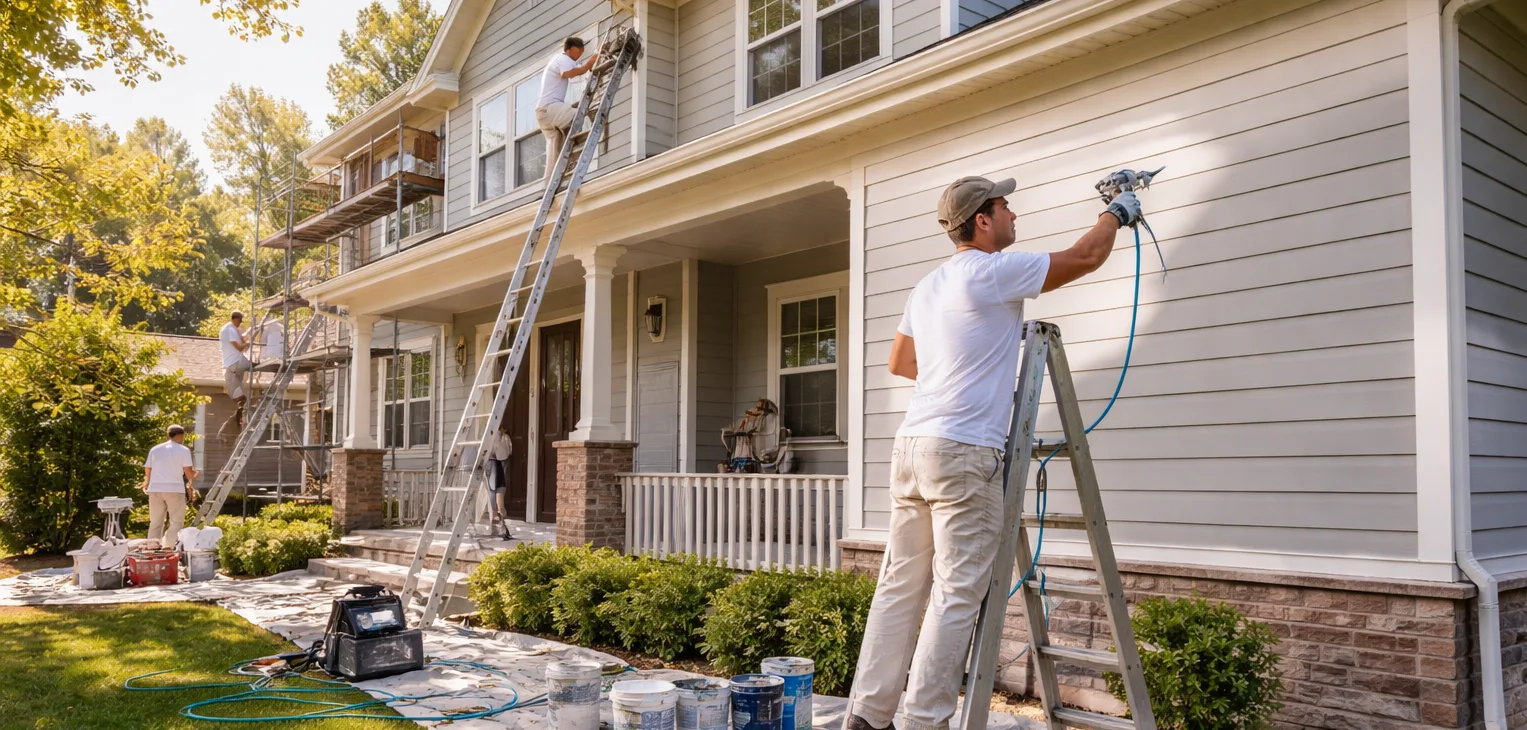
Step 7 – Apply Paint with Precision
There are several methods for application:
- Brush
- Roller
- Sprayer
- Combination approach
Sprayers provide speed and smooth finishes but require expert masking and technique. Rollers and brushes offer control but require more time.
Professionals often spray large areas and back-roll to ensure deep penetration and uniform coverage.
Proper technique includes:
- Maintaining wet edges
- Even coat thickness
- Correct overlap
- Two full coats when required
Rushing this step leads to streaks, thin coverage, and uneven sheen.
Step 8 – Safety Is Not Optional
Exterior painting involves:
- Ladders
- Roof edges
- Scaffolding
- Power tools
Falls are one of the most common home improvement injuries.
Professional crews are trained in safety procedures, use proper equipment, and carry insurance. That peace of mind alone makes hiring experts worth serious consideration.
Why DIY Often Costs More Than Hiring Professionals
On paper, DIY looks cheaper.
But factor in:
- Equipment rental
- Paint and primer
- Repair materials
- Time off work
- Potential mistakes
- Repainting sooner than expected
Suddenly, “saving money” becomes questionable.
Reputable companies bring:
- Experienced crews
- Professional-grade equipment
- Premium materials
- Warranty protection
- Efficient project timelines
The final finish typically looks sharper, lasts longer, and increases property value more effectively.
The Real Purpose of Exterior Paint – Protection First, Beauty Second
A fresh coat of paint does more than boost curb appeal. It:
- Protects siding from moisture
- Prevents wood rot
- Shields against UV damage
- Seals small cracks
- Reduces long-term maintenance costs
Think of paint as your home’s protective shield.
When applied professionally, it becomes a long-term investment rather than a cosmetic upgrade.
When It Makes Sense to Call the Experts
You should strongly consider professional help if:
- Your house is more than one story
- There is visible wood rot
- Large areas require sanding
- You lack proper equipment
- You want long-lasting results
Companies like Rennewservices specialize in delivering consistent, high-quality results while eliminating stress from homeowners. They understand surface preparation, product compatibility, climate considerations, and efficient application techniques.
Instead of spending weeks juggling ladders and weather apps, you get a streamlined, professionally managed project.
Final Thoughts – Smart Homes Deserve Smart Decisions
Painting a house exterior is absolutely possible for determined homeowners. With enough patience, tools, research, and steady hands, you can achieve solid results.
But here’s the honest perspective — exterior painting is physically demanding, technically precise, weather-dependent, and safety-sensitive. One small mistake during preparation or application can shorten the lifespan of the entire job.
That’s why many homeowners ultimately choose professional exterior painting services. The result is smoother, longer-lasting, and far less stressful.
If you want your home to look stunning, stay protected for years, and avoid turning your weekend into a climbing workout with unpredictable results, bringing in skilled professionals is often the wisest move.
After all, ladders are for holiday decorations — not long-term home protection strategy.