

Is Commercial Painting More Expensive Than Residential?
At first glance, painting looks simple. A bucket of paint, a roller, some music in the background — and suddenly you’re a renovation hero. But the moment the conversation turns to commercial painting versus residential painting, the big question appears: why does commercial painting often cost more? Is it just contractors being dramatic, or is there real logic behind the numbers?
Let’s break it down in a clear, practical, and slightly humorous way — without paint splatters on your shoes.
What Do We Actually Mean by Residential Painting?
Residential painting is what most people picture when they think about painting services. Houses, condos, townhomes, basements, garages — places where people live, relax, argue about wall colors, and accidentally lean against freshly painted walls.
Projects usually involve:
- Interior walls, ceilings, trim
- Exterior siding, stucco, fences
- A limited number of rooms or surfaces
- Predictable schedules and access
In cities like Calgary, weather, building materials, and insulation all play a role. That’s why professional residential painting in Calgary, Ab often requires more prep work than homeowners expect, especially with temperature swings and dry air.
Residential painting is typically priced per room, per square foot, or as a full-project estimate — and while it’s not cheap, it’s usually manageable for homeowners.
What Makes Commercial Painting a Different Beast?
Commercial painting steps into an entirely different arena. Think:
- Office buildings
- Warehouses
- Retail stores
- Restaurants
- Medical clinics
- Apartment complexes
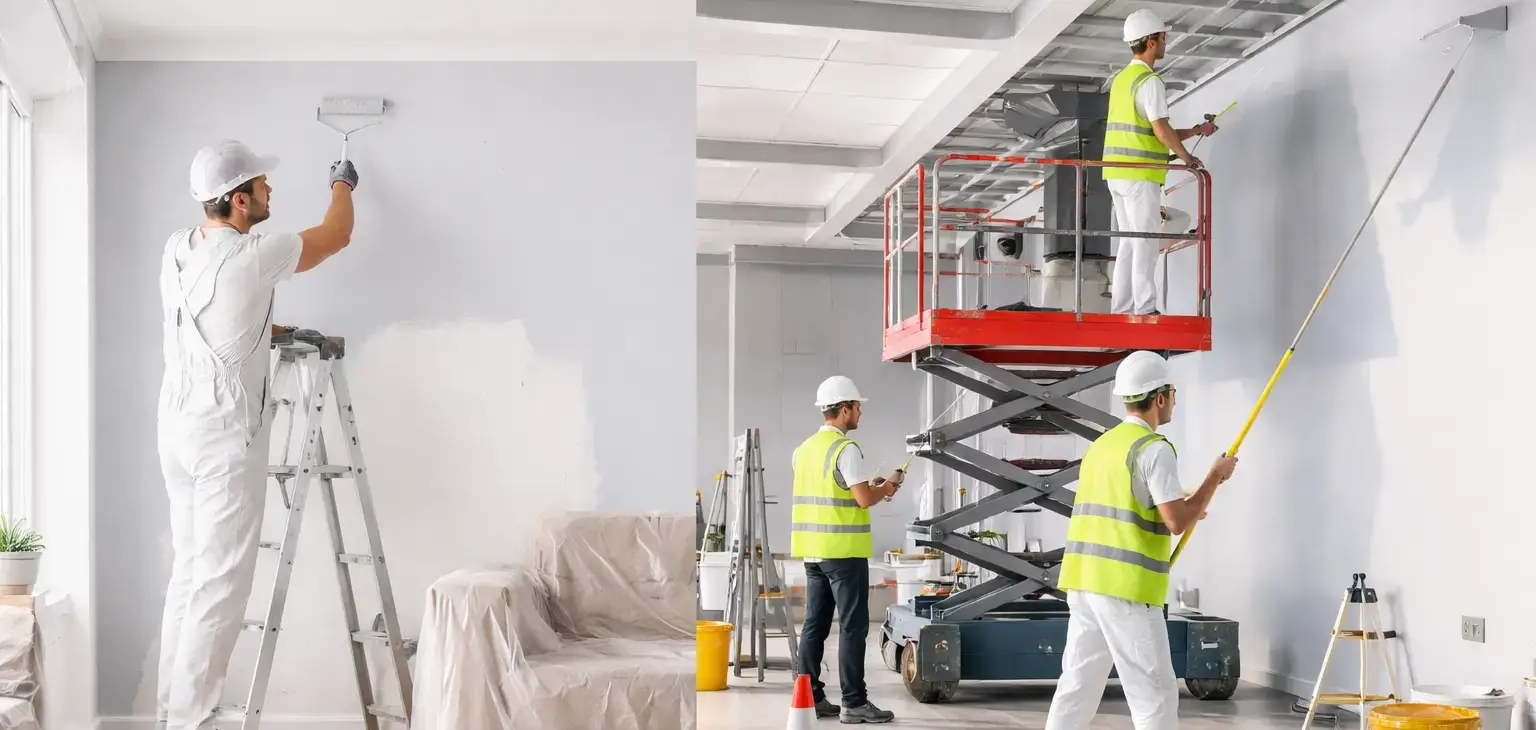
Now imagine painting not one living room, but thousands of square feet — while employees are working, customers are shopping, or tenants are living their lives.
This is where commercial painting Calgary projects start to climb in cost, and not without reason.
Size Matters — A Lot
The most obvious difference is scale. A commercial space can be ten, twenty, or fifty times larger than a residential one.
More space means:
- More paint
- More labor hours
- More equipment
- More coordination
Even if the price per square foot seems lower, the total project cost rises quickly. Painting a warehouse isn’t just “a bigger house” — it’s a logistical operation.
Paint Isn’t Just Paint in Commercial Projects
In residential jobs, paint is often chosen for color, finish, and washability. In commercial painting, performance comes first.
Commercial-grade paints are designed to:
- Resist heavy wear and tear
- Handle frequent cleaning
- Meet fire and safety regulations
- Comply with health standards (especially in clinics and food-related spaces)
These paints cost more, but they last longer. Skipping quality here would mean repainting far sooner — and in business, downtime costs real money.
Scheduling Isn’t Flexible — It’s Strategic
Homeowners can usually work around a painter’s schedule. Businesses cannot.
Commercial painting often happens:
- Overnight
- On weekends
- In tightly controlled phases
Painters may have a few hours to complete a section before employees arrive or customers walk in. This requires larger crews, precise planning, and sometimes premium labor rates.
In contrast, residential projects are usually far more forgiving. No one panics if a bedroom takes an extra afternoon.
Safety and Regulations Raise the Bar
Commercial sites come with stricter safety requirements:
- Elevated work platforms
- Scaffolding and lifts
- Certified safety procedures
- Insurance and compliance documentation
Painters must protect employees, customers, and property — not just furniture and floors. All of this adds cost, but it also reduces risk, liability, and future problems.
Prep Work Is the Hidden Cost
Here’s where many people underestimate commercial painting.
Prep work may include:
- Repairing drywall across large areas
- Treating rusted metal surfaces
- Sealing concrete or industrial materials
- Masking complex fixtures and systems
Residential prep is often localized. Commercial prep is systematic and time-consuming — and skipping it leads to peeling paint, unhappy clients, and expensive redo work.
Why DIY Works at Home — But Not in Commercial Spaces
Painting your own bedroom might be a weekend project. Painting a commercial property yourself is… an adventure best avoided.
DIY commercial painting risks:
- Uneven finishes
- Safety violations
- Business interruptions
- Failed inspections
- Short-lived results
Professional companies like Rennewservices don’t just apply paint — they manage timelines, materials, safety, and long-term durability. For businesses, that reliability is worth far more than the initial cost difference.
So, Is Commercial Painting More Expensive?
Short answer: yes, usually.
Long answer: it’s more expensive because it delivers more value, more durability, and far fewer headaches.
Residential painting focuses on comfort and aesthetics. Commercial painting focuses on performance, compliance, and continuity of operations. Comparing the two is like comparing a family sedan to a delivery truck — both are vehicles, but built for very different jobs.
Where Professional Painters Make the Biggest Difference
Whether it’s a home or a commercial building, professionals save money in the long run by:
- Choosing the right materials
- Preparing surfaces properly
- Applying paint efficiently
- Avoiding costly mistakes
- Delivering results that last years, not months
In Calgary’s climate, this matters even more. Temperature swings, dry air, and seasonal changes punish poor paint jobs quickly.
Final Thoughts — Choose Smart, Not Cheap
Painting isn’t just about color. It’s about protection, longevity, and image.
Commercial painting costs more because businesses need more — stronger coatings, faster execution, stricter standards, and zero surprises. Residential painting costs less because the environment is simpler and more forgiving.
Either way, trusting experienced professionals like Rennewservices ensures that the job is done right the first time — without last-minute stress, uneven finishes, or that sinking feeling when the paint starts peeling far too soon.
And if you ever feel tempted to “just do it yourself,” remember: paint has a way of revealing every shortcut you take — usually when it’s already too late.