
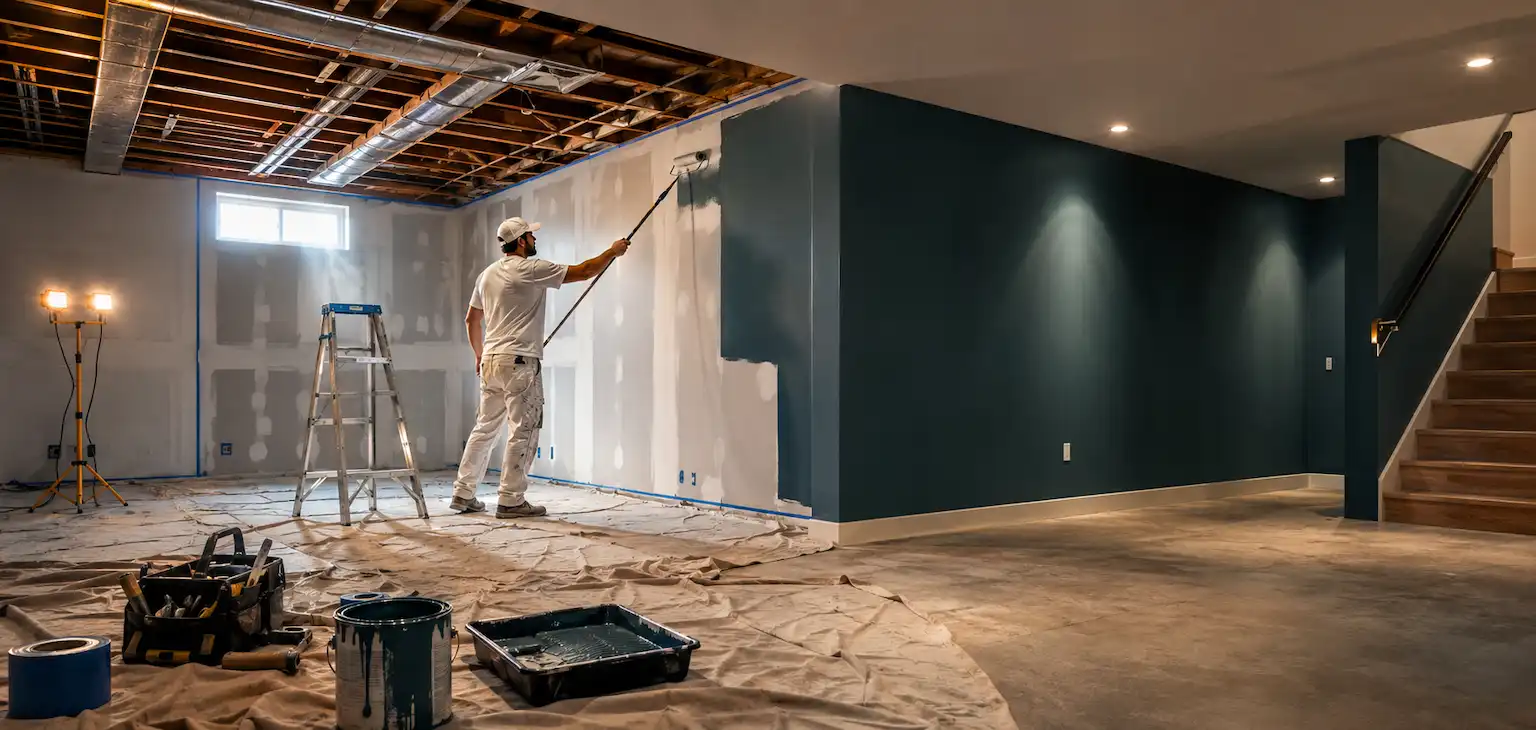

How Much Does It Cost to Paint a Basement?
Painting a basement can cost anywhere from about $1,000 to more than $8,000 in Canada, with many professionally completed projects landing between $2,000 and $5,000. That is a broad range, but basements are not exactly famous for being predictable. One may be a clean, finished family room with smooth drywall, while another contains concrete walls, exposed joists, old stains, awkward pipes and a mysterious patch that everyone has politely ignored since 2009.
The final price depends on the size and condition of the space, the surfaces being painted, the amount of preparation required, paint quality and the complexity of the work. A simple wall refresh may be relatively affordable. Painting walls, ceilings, trim, doors, stairs and an exposed ceiling is a much larger project.
This guide explains what homeowners are really paying for, which choices raise or lower the price and why a detailed professional estimate is far more useful than multiplying the basement floor area by a random number found online.
Average Basement Painting Cost
For general planning, the following price ranges can provide a useful starting point:
- A small or straightforward basement: approximately $1,000 to $2,500
- An average finished basement: approximately $2,000 to $5,000
- A large basement or a project with extensive preparation: approximately $4,500 to $8,000 or more
These are not fixed quotes. They are broad estimates for professional work and may include different combinations of labour, materials and surface preparation. Taxes may also be additional.
Painters sometimes price interior walls by paintable surface area, while others estimate the entire project based on labour, materials and complexity. Walls alone may commonly fall around $2 to $4 per square foot of wall surface, depending on their condition and the products selected. Ceilings, trim, doors and repairs are normally priced separately or incorporated into a complete project quote.
The important phrase here is “wall surface.” A 1,000-square-foot basement does not have only 1,000 square feet to paint. Once the perimeter walls, interior partitions and stairwell are measured, the actual paintable area can be several times larger than the floor area.
What Determines the Final Price?
Basement painting costs are driven mainly by time, materials and difficulty. Two basements with identical floor plans can produce very different estimates if one is ready for paint and the other requires two days of repairs before a roller can even make its grand entrance.
The biggest pricing factors include:
- Total paintable wall and ceiling area
- Number of rooms, corners, closets and narrow spaces
- Wall material, such as drywall, concrete or concrete block
- Surface damage, stains, peeling paint or unfinished repairs
- Ceiling type and height
- Number of doors, windows, baseboards and other trim elements
- Paint colour, finish and product quality
- Number of coats required
- Furniture moving, masking and floor protection
- Accessibility and ventilation
A mostly empty, open-plan basement with smooth walls is usually faster to complete than a divided layout containing several bedrooms, a bathroom, storage rooms and enough trim to make a painter reconsider every decision that led to this moment.
How Much Does Preparation Add?
Preparation is often the least glamorous part of painting and the most important part of the job. Paint can change a colour, but it cannot magically flatten damaged drywall, seal an active leak or persuade peeling material to remain attached.
Basic preparation may include filling nail holes, light sanding, cleaning surfaces, caulking small gaps and protecting floors and fixtures. More demanding work can involve repairing drywall, removing loose paint, treating stains, sanding rough patches, sealing porous masonry or applying a specialized primer.
Minor preparation may already be included in a professional quote. Significant repairs can add several hundred dollars or more, depending on the damage. If new drywall has recently been installed, it normally needs proper sanding, dust removal and priming before finish coats are applied. Concrete and concrete-block walls may also require masonry-compatible products.
Moisture deserves special attention. Efflorescence, damp spots, bubbling paint or musty odours should not simply be covered. The source of the moisture must be identified first. Otherwise, the beautiful new finish may have a shorter career than expected.
Does Painting the Ceiling Cost More?
Yes, and the type of ceiling makes a major difference. A smooth drywall ceiling is generally the simplest option. A textured ceiling requires more care and may need spraying rather than rolling, particularly if the existing texture is delicate.
An exposed basement ceiling is a different project entirely. Joists, pipes, wiring, ducts and dozens of small angles create far more surface area than they appear to at first glance. Spraying the structure in black, white or another colour can create a modern industrial look, but extensive masking and careful application are required. Mechanical equipment, electrical components, lights, valves and other items may need individual protection.
As a rough planning allowance, adding a standard ceiling can increase the price by approximately $1 to $2 per square foot of ceiling area. An exposed ceiling may cost considerably more because of its complexity and material consumption.
What About Trim, Doors and Stairs?
Baseboards, window casings, doors and stairs make a basement look finished, but they also add detailed labour. Trim must be cleaned, sanded where necessary, caulked and painted with controlled lines. Doors may need to be painted on both sides, including their edges and frames.
Trim is often estimated by linear foot, while doors may be priced individually. A simple basement with minimal baseboard will cost less than one with multiple rooms, decorative moulding, built-in shelving and a long staircase.
Stairs deserve their own mention because they combine awkward access with detailed cutting around stringers, railings and treads. If stair risers, spindles or railings are included, the painter is no longer dealing with one flat surface. The price rises because the work slows down, not because the staircase has developed expensive taste.
How Paint Choices Affect the Budget
The cheapest can of paint is not always the least expensive choice. Basements often experience lower temperatures, limited airflow, reduced natural light and, in some homes, higher humidity. Using a suitable primer and a durable finish can help the result remain attractive for longer.
Premium paint costs more but may offer better coverage, washability, colour retention and resistance to scuffs. A durable eggshell or satin finish is often practical for family rooms, play areas and hallways. Flat paint can help conceal minor ceiling imperfections, while trim usually benefits from a harder, more washable finish.
Colour changes also matter. Covering a dark wall with a light colour may require a dedicated primer and multiple coats. Very bright or saturated colours can also need extra applications. Choosing a colour with good hiding power may reduce labour and material use without forcing the basement into fifty shades of builder beige.
Is DIY Basement Painting Really Cheaper?
DIY painting can reduce labour costs, especially when the basement is small, empty and already in excellent condition. However, the real DIY budget includes more than paint. Homeowners may need primer, brushes, rollers, extension poles, trays, masking materials, drop sheets, caulk, filler, sanding supplies, cleaning products and possibly a sprayer or ladder.
There is also the value of time. A professional crew may complete in days what takes a homeowner several weekends. Mistakes such as poor surface preparation, incorrect primer, visible roller marks, paint on flooring or inadequate coverage can create additional material costs and a second round of work.
Hiring professionals is especially valuable when the project includes drywall repairs, masonry, water stains, exposed ceilings, stairwells or multiple finishes. Reliable basement interior painting in Calgary can evaluate the actual surfaces, recommend appropriate products and provide a clear scope before work begins.
Rennew Services can handle the painting as part of a broader improvement project, which is particularly convenient when the basement also requires drywall, lighting, flooring, insulation or other renovation work. Coordinating related tasks in the correct order helps prevent freshly painted walls from becoming accidental construction collateral.
How to Get an Accurate Basement Painting Estimate
The most accurate estimate comes from an on-site inspection. Before requesting a quote, decide which surfaces should be included and whether the colour is changing significantly. Mention any known moisture history, repairs or stains rather than allowing them to become an exciting surprise on the first workday.
A useful professional quote should clarify:
- Which walls, ceilings, doors and trim are included
- What preparation and repairs will be completed
- Whether primer is required
- The number of finish coats
- The paint brand or quality level
- Whether labour and materials are included
- How furniture, floors and fixtures will be protected
- The expected schedule and cleanup process
Comparing only the final numbers can be misleading. One estimate may cover walls only, while another includes repairs, ceilings, trim, premium paint and full protection. The cheaper quote is not cheaper if half the project is missing from it.
How Can You Keep the Cost Under Control?
The best way to control the budget is to define the scope early. If every surface does not need painting, prioritize the walls and areas with the greatest visual impact. Keeping a similar colour can sometimes reduce the number of coats. Clearing small objects and personal belongings before the crew arrives may also save setup time, provided the contractor explains what should be moved.
Do not cut costs by skipping necessary repairs or primer. Those shortcuts are inexpensive only until the paint begins to peel, stains return or patched areas flash through the finish. Spending money on correct preparation is less exciting than choosing a colour, but it is what makes the chosen colour look good.
It is also wise to complete electrical, drywall, carpentry and other disruptive work before painting. Rennew Services offers multiple home improvement and renovation solutions, allowing the project to be planned logically rather than assembled from a parade of unrelated appointments.
Is Professional Basement Painting Worth It?
For most finished basements, professional painting offers more than convenience. It produces cleaner lines, more consistent coverage, better surface preparation and a finish suited to the conditions below grade. It can also protect the value of completed drywall, trim and flooring by ensuring the final stage of the renovation is not treated as an afterthought.
So, how much does it cost to paint a basement? A simple project may begin near $1,000, while an average professional transformation commonly falls between $2,000 and $5,000. Larger or more complex work can reach $8,000 or beyond. The only reliable number, however, is one based on the actual space and a clearly defined scope.
Ready to turn a dark or unfinished basement into a clean, comfortable part of your home? Contact Rennew Services for a personalized estimate. Their team can assess the surfaces, explain the options and complete the work with the preparation and attention to detail a lasting finish deserves.

About Author Illia Bespalko
Leave a Reply