
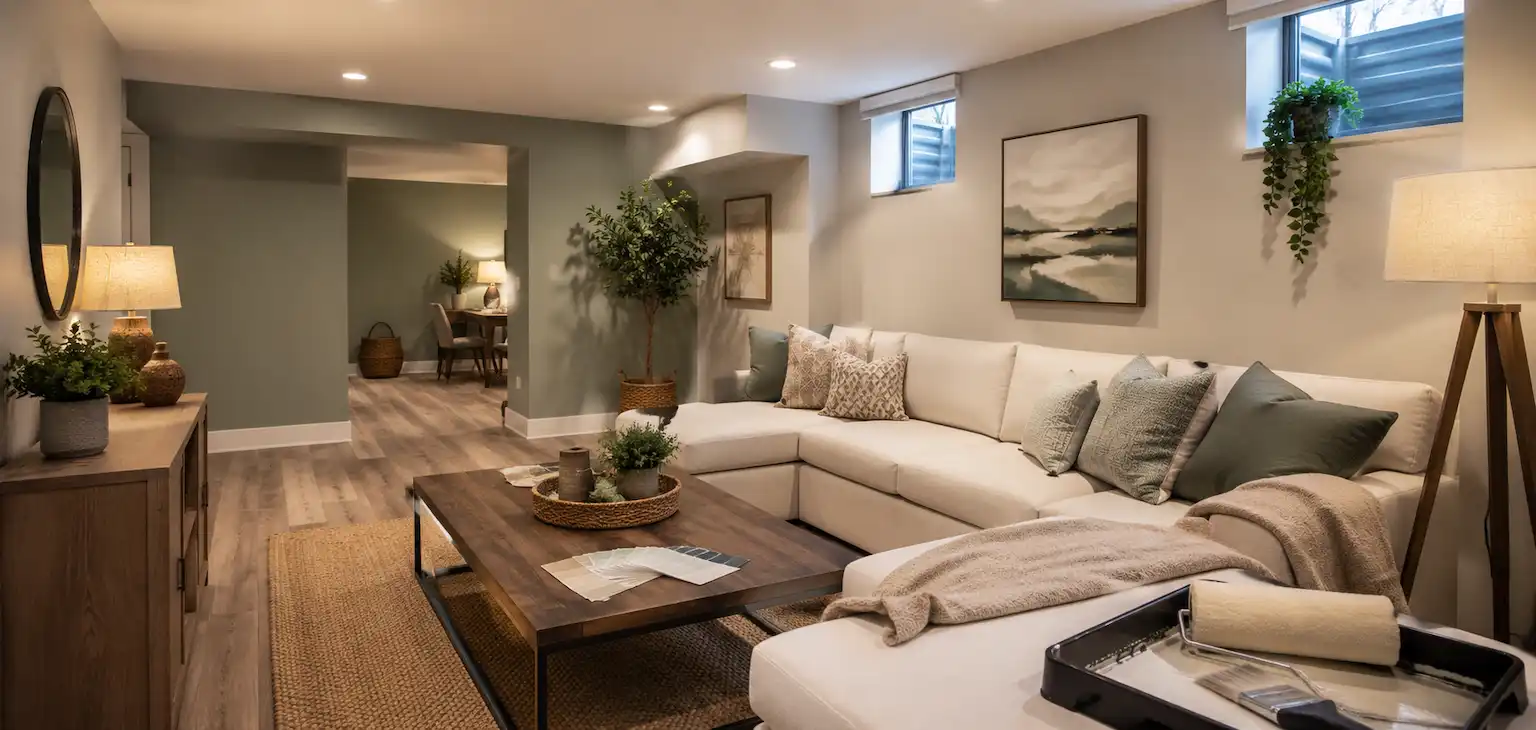

Best Basement Paint Colours for Rooms With Little Natural Light
Basements are useful, practical, and often surprisingly spacious. Unfortunately, they are not always famous for their cheerful natural light. Small windows, deep window wells, low ceilings, and limited exposure to the sun can make even a well-furnished basement feel darker than expected.
The right paint colour can completely change that impression.
A carefully chosen shade can make a basement appear brighter, warmer, cleaner, and more inviting. The wrong shade, however, can turn the room into something that feels less like a comfortable living area and more like a storage unit where old exercise equipment goes to be forgotten.
Choosing basement paint is not simply a matter of picking the lightest colour on the sample card. Undertones, lighting temperature, room size, flooring, furniture, and the purpose of the space all influence how a colour will look once it is applied to the walls.
Here are some of the best basement paint colours for rooms with little natural light, along with practical advice for choosing a shade that works in your space.
Why Paint Colours Look Different in Basements
Paint colours rarely look exactly the same on a wall as they do on a small paper sample. This difference becomes even more noticeable in basements.
Natural daylight generally reveals colours more accurately. In a basement, artificial lighting often becomes the main light source, and different bulbs can dramatically change how a paint colour appears.
Warm bulbs may make beige, cream, and greige colours look richer and more yellow. Cool bulbs can make grey or blue shades appear sharper and colder. Shadows from low ceilings, narrow hallways, and small windows can also make colours seem darker than expected.
This is why professional painters usually recommend testing paint samples directly on several walls. A colour that looks beautiful beside the window may appear completely different in a dark corner.
It is also important to view samples in the morning, afternoon, and evening. Basement lighting can change significantly throughout the day, even when the room receives only a small amount of natural light.
Warm White
Warm white is one of the safest and most effective choices for a dark basement.
Unlike bright, pure white, which can sometimes look cold or slightly blue under artificial lighting, warm white contains subtle cream, beige, or yellow undertones. These undertones make the room feel softer and more comfortable.
Warm white works particularly well in:
- Basement family rooms
- Guest bedrooms
- Home offices
- Hallways
- Laundry areas
It also reflects light effectively, helping artificial lighting travel around the room. This can make walls feel more open and reduce the heavy, enclosed feeling that some basements naturally have.
However, not all warm whites are identical. Some lean heavily toward yellow, while others have only a gentle warmth. The best option usually depends on the colour of the flooring, trim, furniture, and light bulbs.
If your flooring has warm brown or honey tones, a creamy white may work beautifully. If the flooring is cooler grey or charcoal, choose a more neutral warm white to prevent the walls and floor from fighting for attention.
Soft Cream
Soft cream is a good choice when you want something warmer than white but still light enough to brighten the basement.
Cream shades can make a basement feel welcoming without being overly traditional. They pair naturally with wood furniture, beige carpeting, warm flooring, and soft lighting.
A pale cream can also help create the impression of sunlight, even if the actual sunlight appears for approximately eleven minutes every second Tuesday.
The key is to avoid creams with extremely strong yellow undertones. In rooms with warm artificial lighting, an overly yellow cream can become much more intense once it covers all four walls.
A softer, muted cream is usually more flexible and easier to coordinate with furniture and decorative elements.
Light Greige
Greige is a combination of grey and beige. It has become popular because it offers the modern appearance of grey without feeling as cold.
In basements with limited natural light, a light greige can provide warmth, brightness, and visual depth. It works especially well in modern family rooms, rental suites, home theatres, and multipurpose spaces.
The beige undertones prevent the room from appearing too cool, while the grey undertones give the colour a clean, contemporary finish.
Light greige also pairs well with:
- White trim
- Black fixtures
- Natural wood
- Neutral furniture
- Warm metal finishes
- Stone or vinyl flooring
Be careful with darker greige colours. A shade that looks medium-light in a bright showroom may appear much deeper in a basement. Choosing a colour one or two shades lighter than your initial preference is often a smart decision.
Pale Beige
Beige has sometimes been unfairly accused of being boring. In reality, a well-chosen pale beige can be one of the most practical basement colours.
It adds warmth without dominating the room and works with a wide range of flooring, furniture, and decor styles. Pale beige can also make a basement feel more connected to the rest of the home, especially if similar warm neutrals are used upstairs.
Modern beige shades are generally softer and less yellow than older versions. Look for colours with balanced neutral undertones rather than strong orange or gold notes.
Pale beige is especially effective in basement bedrooms because it creates a calm and comfortable atmosphere. It also provides enough warmth to prevent the room from feeling clinical.
Light Taupe
Light taupe sits somewhere between beige, grey, and brown. It is slightly deeper than cream or greige but can still work well in a basement when selected carefully.
Taupe adds sophistication and warmth, making it a good option for a basement office, lounge, guest room, or entertainment space.
Because taupe can absorb more light than white or cream, it works best when the basement has good artificial lighting. Recessed lights, floor lamps, wall lights, and table lamps can help keep the room balanced.
Consider using light taupe on the main walls and a lighter colour on the ceiling and trim. This creates contrast without making the basement feel smaller.
Soft Blue
Blue may not be the first colour that comes to mind for a dark basement, but certain soft blue shades can work surprisingly well.
The best choices are pale, muted blues with grey or green undertones. These colours can make a room feel fresh, calm, and slightly more spacious.
Soft blue works particularly well in:
- Guest rooms
- Bathrooms
- Home offices
- Children’s playrooms
- Exercise rooms
Avoid deep navy, strong royal blue, or highly saturated turquoise unless the room has excellent lighting or the colour is being used only as an accent.
A muted blue-grey can provide personality without overwhelming the space. It also pairs nicely with white trim, light wood, and neutral flooring.
Pale Sage Green
Pale sage green is another excellent option for basements with limited daylight.
Sage contains both green and grey undertones, giving it a calm, natural appearance. It can introduce colour into the basement while still acting almost like a neutral.
This shade works well with wood finishes, warm white trim, beige furniture, and natural textures. It is particularly suitable for home offices, guest rooms, hobby rooms, or basement living areas.
Choose a sage colour that is light and slightly muted. Dark olive or forest green can make a poorly lit room feel much smaller, especially when used on every wall.
A pale sage creates a more relaxing result and gives the basement a sense of character without making it feel gloomy.
Blush Beige
Blush beige is a warm neutral with a subtle pink or clay undertone. It can be an attractive alternative to traditional beige or cream.
This colour works especially well in basement bedrooms, reading areas, studios, or comfortable family spaces. The slight warmth helps counteract cool artificial lighting and creates a softer atmosphere.
The goal is not to make the basement bright pink. A good blush beige appears neutral at first glance, with only a gentle warmth that becomes more visible in certain lighting conditions.
It can look particularly elegant with warm white trim, natural wood furniture, and brass or black accents.
Should You Use Pure White?
Pure white may seem like the obvious solution for a dark room, but it is not always the best one.
White reflects light, but it cannot create light where very little exists. In a basement with weak or cool artificial lighting, pure white walls may appear grey, flat, or unfinished.
A slightly warm off-white is often more forgiving. It reflects light while adding enough warmth to make the room feel comfortable.
Pure white can still work well for ceilings, trim, doors, and shelving. These brighter elements can create contrast and help define the shape of the room.
What Colours Should You Avoid?
There are no absolute rules in interior design, but some colours are more difficult to use in a dark basement.
Very dark colours can absorb available light and make the walls feel closer together. Deep charcoal, black, navy, dark brown, and burgundy may work as accent colours, but using them throughout the entire room can create a heavy appearance.
Strong cool greys can also be challenging. Without natural light, they may develop blue, green, or purple undertones that were not obvious on the sample card.
Highly saturated colours, such as bright red, vivid orange, or electric blue, can become overwhelming under artificial lighting.
That does not mean bold colours are forbidden. They are often more effective on a feature wall, built-in shelving, furniture, or decorative details rather than every surface.
Use a Lighter Colour on the Ceiling
The ceiling plays an important role in how open a basement feels.
Most basements benefit from a ceiling colour that is lighter than the walls. White or soft off-white can help reflect light and make a low ceiling appear slightly higher.
Painting the ceiling the same colour as the walls can sometimes work in modern spaces, but this approach requires careful planning. In a dark basement, it may create a closed-in effect unless the colour is very light.
Professional painters can also help address exposed ducts, pipes, beams, and uneven ceiling surfaces. Proper preparation and the correct paint finish can make these areas look much cleaner and more intentional.
Choose the Right Paint Finish
Colour is important, but paint finish also affects how the basement looks.
Eggshell and satin finishes are popular for basement walls because they reflect more light than completely flat paint. They are also easier to clean, which is useful in family rooms, playrooms, rental spaces, and high-traffic areas.
Flat or matte finishes can hide minor wall imperfections, but they reflect less light and may be harder to maintain.
Semi-gloss paint is commonly used for trim, doors, and baseboards. Its stronger light reflection creates contrast and helps these details stand out.
Basements may also have moisture concerns, particularly near exterior walls, utility areas, or laundry rooms. Using the correct primer and paint product is essential for achieving a durable finish.
Coordinate Paint With Artificial Lighting
Paint and lighting should be planned together.
Warm white bulbs generally work well with cream, beige, greige, taupe, and warm white walls. Neutral white bulbs can provide a more balanced appearance for blue, green, and grey shades.
Using several light sources is usually better than relying on one bright ceiling fixture. Recessed lights, floor lamps, wall sconces, and table lamps help reduce shadows and distribute light more evenly.
Professional painters often evaluate how a room is lit before recommending final colours. This can prevent unpleasant surprises after the paint has dried and the furniture has been returned.
Why Professional Basement Painting Makes a Difference
Basement walls frequently require more preparation than walls in other parts of the home. Small cracks, patched areas, moisture stains, old paint, uneven drywall, and surface imperfections can all affect the finished result.
Professional painters can inspect the surfaces, complete the necessary repairs, choose an appropriate primer, and apply paint evenly. They can also help identify colours that work with the room’s lighting and existing materials.
Homeowners searching for basement painting in Calgary can benefit from working with an experienced painting company that understands how basement lighting, wall conditions, and paint finishes influence the final appearance.
Painting a basement yourself may initially seem straightforward. Then you discover the damaged corner behind the cabinet, the mysterious stain near the utility room, and the ceiling edge that apparently requires the flexibility of a professional gymnast.
Proper equipment, preparation, and application techniques can make the difference between a smooth, durable finish and a wall covered with roller marks, uneven patches, and visible repairs.
Final Thoughts
The best basement paint colours are usually light, warm, and adaptable. Warm white, soft cream, pale beige, light greige, muted blue, pale sage, and subtle taupe can all help a basement feel brighter and more comfortable.
However, the ideal colour depends on more than the name printed on the paint sample. Lighting, flooring, furniture, ceiling height, wall condition, and room function all influence the final result.
Testing samples is always important, and proper surface preparation is essential. A professional painting team can help you select the right shade, repair problem areas, and create a clean, consistent finish that lasts.
With the right colour and expert application, even a basement with minimal natural light can become one of the most comfortable and attractive spaces in the home.
Leave a Reply