
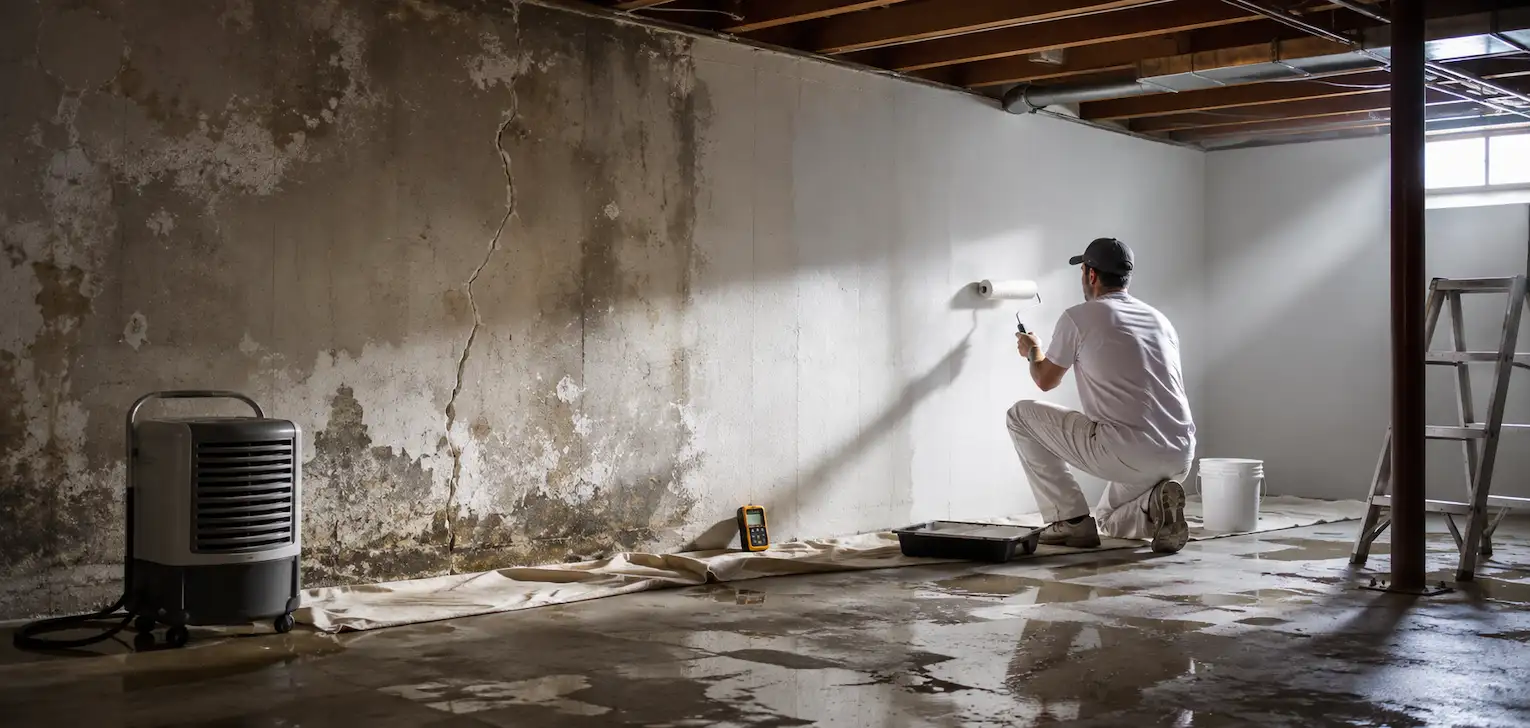

Can You Paint Basement Walls With Moisture Problems?
A fresh coat of paint can make a basement feel cleaner, brighter, and far more inviting. It can turn a grey storage area into a comfortable family room, home office, gym, workshop, or entertainment space. However, when basement walls have moisture problems, painting is not as simple as choosing a colour, opening a can, and hoping for the best.
So, can you paint basement walls with moisture problems?
The honest answer is – sometimes, but only after the source of the moisture has been identified and properly addressed.
Paint can improve the appearance of basement walls and provide a durable protective finish. What it cannot do is repair a foundation leak, stop water from entering through cracks, remove hidden mould, or correct poor drainage around a home. Painting over active moisture may hide the problem temporarily, but it usually returns – often with bubbling, peeling, stains, and an unpleasant musty smell.
Before painting begins, the wall must be dry, stable, clean, and properly prepared. Otherwise, even premium paint may fail.
Why Basement Walls Develop Moisture Problems
Basements are naturally more vulnerable to moisture because they are located partially or completely below ground level. The surrounding soil can hold a significant amount of water, especially after heavy rain or melting snow.
When the soil becomes saturated, pressure can build against the foundation. Water may enter through small cracks, gaps around windows, poorly sealed joints, or porous concrete.
Moisture can also come from inside the home. Warm, humid air may settle in the basement and come into contact with cold walls. This can create condensation, particularly during warmer months.
Common causes of basement moisture include:
- Foundation cracks
- Poor exterior grading
- Clogged or damaged gutters
- Downspouts releasing water too close to the foundation
- Plumbing leaks
- High indoor humidity
- Condensation on cold concrete
- Leaking basement windows
- Damaged exterior waterproofing
- Inadequate ventilation
Some moisture issues are minor and manageable. Others indicate a larger drainage, plumbing, or foundation problem. Determining the cause is the first and most important step.
What Happens If You Paint Over a Damp Wall?
Painting over a damp basement wall may create a temporary cosmetic improvement, but the result usually does not last.
Moisture trapped behind paint creates pressure against the coating. Over time, the paint may lose adhesion and separate from the surface.
You may begin to notice:
- Bubbles under the paint
- Peeling or flaking sections
- Cracks in the coating
- Dark stains returning
- White powdery deposits
- Mould or mildew
- Musty odours
- Soft or damaged drywall
That white powdery material sometimes found on concrete is called efflorescence. It forms when moisture moves through masonry and leaves mineral deposits behind as it evaporates. Painting directly over it usually leads to poor adhesion.
A freshly painted wall can look perfect for several weeks and then suddenly begin shedding paint like a snake changing its skin. Unfortunately, unlike the snake, your basement wall will not look better afterward.
How to Check Whether the Wall Is Dry Enough
A wall may feel dry to the touch while still containing enough moisture to cause paint failure.
One simple test involves taping a piece of clear plastic tightly against the wall. Leave it in place for approximately 24 to 48 hours.
If moisture appears on the outside of the plastic, the problem may be condensation caused by humid indoor air.
If moisture appears behind the plastic, water vapour may be moving through the wall.
This test can provide a useful indication, but it does not identify every possible problem. A professional may use a moisture meter to check the wall more accurately. Infrared equipment may also help identify damp sections that are not visible from the surface.
Professional testing is especially helpful when the basement has a history of leaks, mould, repeated paint failure, or unexplained odours.
Can Waterproof Paint Fix a Wet Basement?
Waterproof or moisture-resistant paint can be useful in certain situations, but it is not a miracle product.
Some masonry coatings are designed to resist limited moisture movement through concrete or brick. They may help protect properly prepared basement walls when the underlying moisture issue is minor and controlled.
However, waterproof paint cannot permanently solve:
- Active foundation leaks
- Significant cracks
- Water entering around windows
- Plumbing problems
- Poor exterior drainage
- Flooding
- Severe hydrostatic pressure
Applying waterproof paint over an unresolved leak is similar to placing a towel over a dripping pipe and declaring the plumbing repaired. It may look slightly better, but the water is still coming.
These coatings also require careful preparation. The wall usually needs to be clean, structurally sound, and free from loose paint, dust, mould, grease, mineral deposits, and other contaminants.
The product must also be suitable for the specific surface. Paint intended for drywall may not perform properly on concrete or masonry.
Should Old Paint Be Removed?
Loose, peeling, bubbling, or flaking paint should be removed before the wall is repainted.
New paint can only bond as well as the surface underneath it. If the existing coating is unstable, the new finish may peel away together with the old paint.
Preparation may include:
- Scraping loose coatings
- Sanding rough edges
- Wire-brushing concrete or masonry
- Cleaning dust and debris
- Removing efflorescence
- Treating mould or mildew
- Repairing cracks
- Filling damaged areas
- Allowing the wall to dry completely
This part of the job is time-consuming, messy, and extremely important. Many painting failures are caused not by poor-quality paint, but by rushed preparation.
Professional painters understand how different surfaces respond to moisture, primers, patching materials, and coatings. They can also identify warning signs that a homeowner may overlook.
What About Mould and Mildew?
Mould should not simply be covered with paint.
Painting over visible mould does not remove it. The marks may disappear temporarily, but the mould can continue growing behind the coating if moisture remains present.
Affected areas need to be properly cleaned and dried. Porous materials such as damaged drywall, insulation, or wood may need to be removed if contamination is extensive.
Moisture-resistant or mould-resistant paint can help reduce future surface growth, but only after the original problem has been corrected.
A basement with recurring mould may require improved ventilation, a dehumidifier, plumbing repairs, drainage improvements, or professional remediation.
What Type of Paint Works Best on Basement Walls?
The best paint depends on the wall material and the condition of the basement.
Concrete and masonry walls often require a suitable masonry primer and a breathable coating designed for below-grade surfaces. Drywall may require a stain-blocking or moisture-resistant primer, particularly if previous water marks are visible.
Acrylic latex paint is commonly used because it dries relatively quickly, has low odour, and is easier to clean than many oil-based products.
The finish also matters. A washable eggshell or satin finish may be suitable for finished basement rooms, while specialized masonry coatings may be necessary for bare concrete.
Choosing a random leftover paint can from the garage is rarely a reliable strategy. That mysterious beige paint may have survived three house moves, but that does not mean it belongs on a damp foundation wall.
Why Primer Is So Important
Primer helps create a stable surface for the finish coat. It can improve adhesion, reduce uneven absorption, block stains, and support a more consistent final appearance.
However, primer is not a substitute for moisture repair. Even the strongest primer may fail if it is applied to an actively wet wall.
Different problems require different primers. A masonry surface may need an alkali-resistant primer. Water stains may require a stain-blocking product. Previously painted surfaces may need a bonding primer.
Using the wrong primer can lead to poor coverage, visible stains, uneven sheen, or premature peeling.
When Is It Safe to Paint?
Painting can usually begin when:
- The moisture source has been corrected
- The wall is completely dry
- Cracks and damaged areas have been repaired
- Mould and mildew have been properly removed
- Loose paint has been scraped away
- The surface is clean and stable
- The correct primer and paint have been selected
Drying time can vary considerably. A wall may require several days or longer depending on the severity of the problem, temperature, humidity, airflow, and wall material.
Using fans and a dehumidifier may help, but the wall should still be tested before painting.
Why Professional Painting Is Usually the Better Choice
Basement painting involves more than applying colour. It requires an understanding of moisture, surface preparation, ventilation, primers, coatings, drying conditions, and potential health concerns.
Professional painters can inspect the condition of the walls, identify obvious signs of moisture damage, recommend appropriate preparation, and apply products correctly.
For homeowners considering basement painting in Calgary, working with an experienced painting company can help prevent wasted materials, repeated repairs, and disappointing results.
Rennewservices provides professional painting solutions for basements and other interior areas. A professional approach can produce a cleaner finish, stronger adhesion, more even coverage, and longer-lasting results.
It also saves homeowners from spending an entire weekend scraping old paint, inhaling dust, moving boxes, and discovering that the previous owner painted directly over a mysterious damp patch in 1998.
Final Thoughts
You can paint basement walls that have experienced moisture problems, but you should not paint over active moisture.
The source of the water must be identified and corrected first. The surface then needs to be cleaned, repaired, dried, primed, and coated with suitable products.
Skipping these steps may lead to peeling paint, recurring stains, mould, and additional damage. Proper preparation takes more time, but it protects the final result.
A professionally painted basement can become a bright, comfortable, and useful part of the home. The key is to treat the moisture problem before treating the wall with paint.
Leave a Reply